Dental Bridges: A Time-Tested Solution
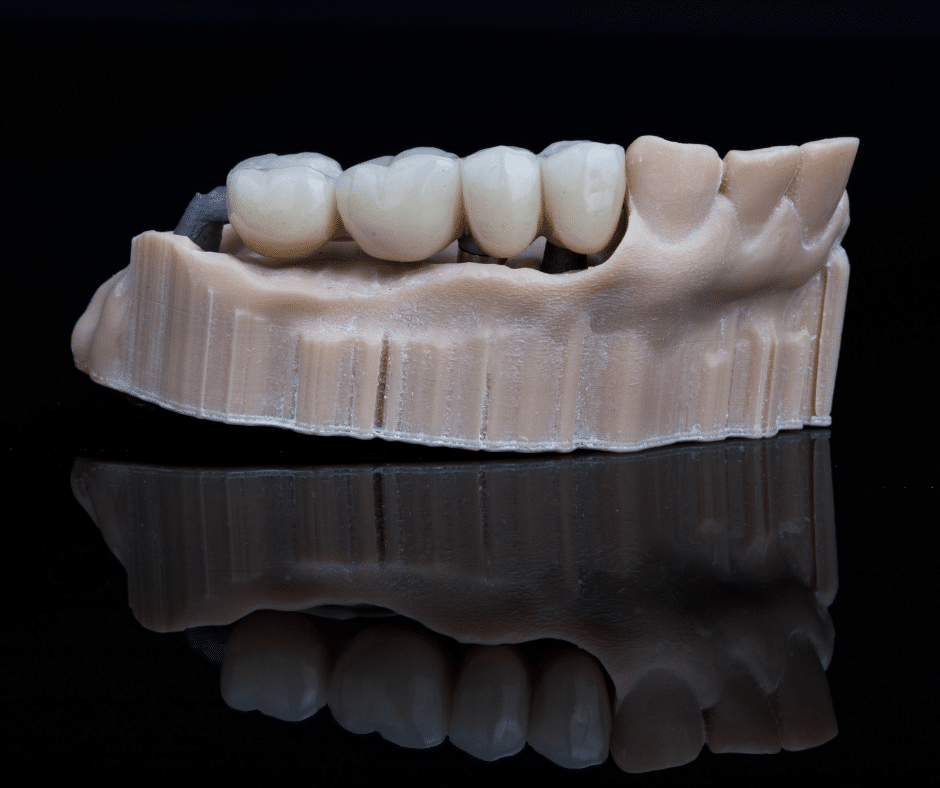
A dental bridge literally bridges the gap left by one or more missing teeth. It is a fixed restoration anchored to natural teeth or implants on either side of the gap, with a false tooth (or teeth) in the middle.
Types of bridges
- Traditional bridge: Crowns on the two adjacent teeth support a false tooth in between.
- Cantilever bridge: Anchored on only one side, used when only one adjacent tooth is available.
- Maryland (resin-bonded) bridge: Uses metal or porcelain wings bonded to the back of adjacent teeth, ideal for front-tooth replacement.
- Implant-supported bridge: Anchored to implants rather than natural teeth, the best choice for multiple missing teeth in a row.
Why a bridge over a denture or implant
- Fixed in place (no removal needed).
- Restores chewing and speaking immediately.
- Prevents adjacent teeth from drifting into the gap.
- Less expensive than multiple implants.
- Completed in 2 to 3 visits.
Caring for your bridge
Brush and floss daily, using a floss threader or water flosser to clean under the false tooth. With good care, a bridge can last 10 to 15 years.
Original article: mohipdental.com